

Tokyo Honzome Chūsen : Yukata and Tenugui
During the Edo period, domestic cotton cultivation and cotton textile production advanced, leading to the widespread use of cotton hand towels (Tenugui). They were used at public bathhouses (Sento) and as head coverings, effectively becoming a type of fashion accessory. In Edo (now Tokyo), kabuki actors and sophisticated individuals commissioned custom-dyed Tenugui with their favorite designs, which were also given as gifts.
Against this backdrop, the Chūsen (pour-dyeing) technique for Tenugui began in Edo towards the end of the Edo period. With the popularization of Chūsen after the Meiji era, the practice of distributing custom-ordered Tenugui featuring unique designs spread to general merchants and industrialists, and the range of commercially available Tenugui expanded significantly.
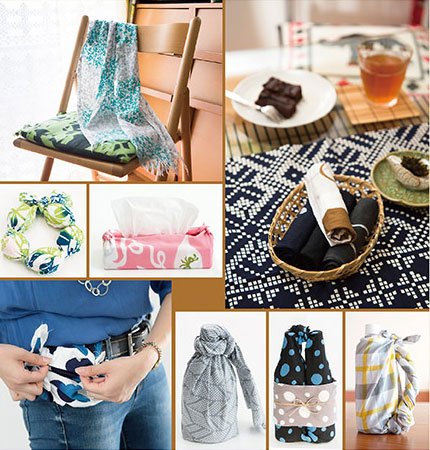
Today, Tenugui have various uses, including:
- Wiping hands, wiping dishes, or as a pot holder.
- Wrapping items (bento boxes, PET bottles, tissue cases, book covers, etc.).
- As a fashion item (worn around the neck, or wrapped around the head in various styles).
- Moistened and used as a wet hand towel (oshibori).
- Dyed with a message-oriented design for distribution as greetings, keepsakes, New Year’s gifts, or other commemorative purposes.
In Tokyo, the culture of custom-dyeing and distributing Tenugui with original designs, a tradition continuing from the Edo period, is still inherited and practiced today.
Chūsen (Pour-Dyeing) Tenugui and Yukata Fabric Dyed in the Tokyo Area
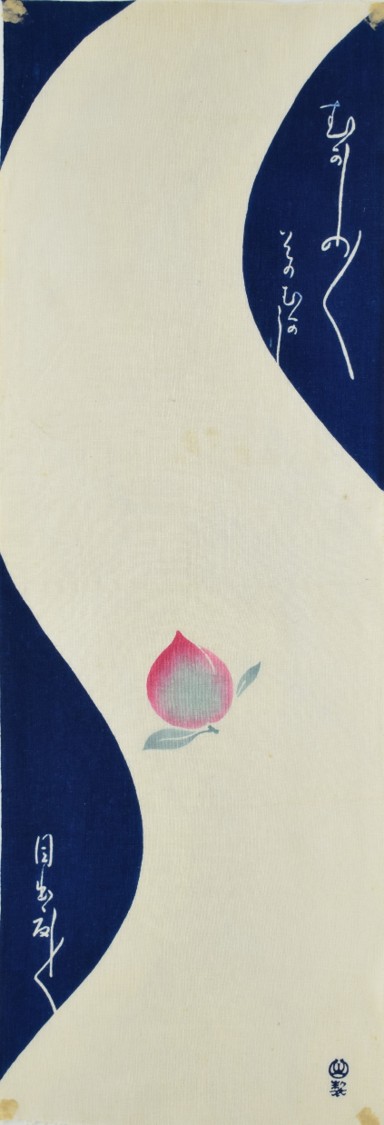
《Mukashi Mukashi (Once Upon a Time)》
Produced by Matsuya
Technique: Chūsen (Sashibun-zome, Partial Dyeing)
From the Toyoda Collection
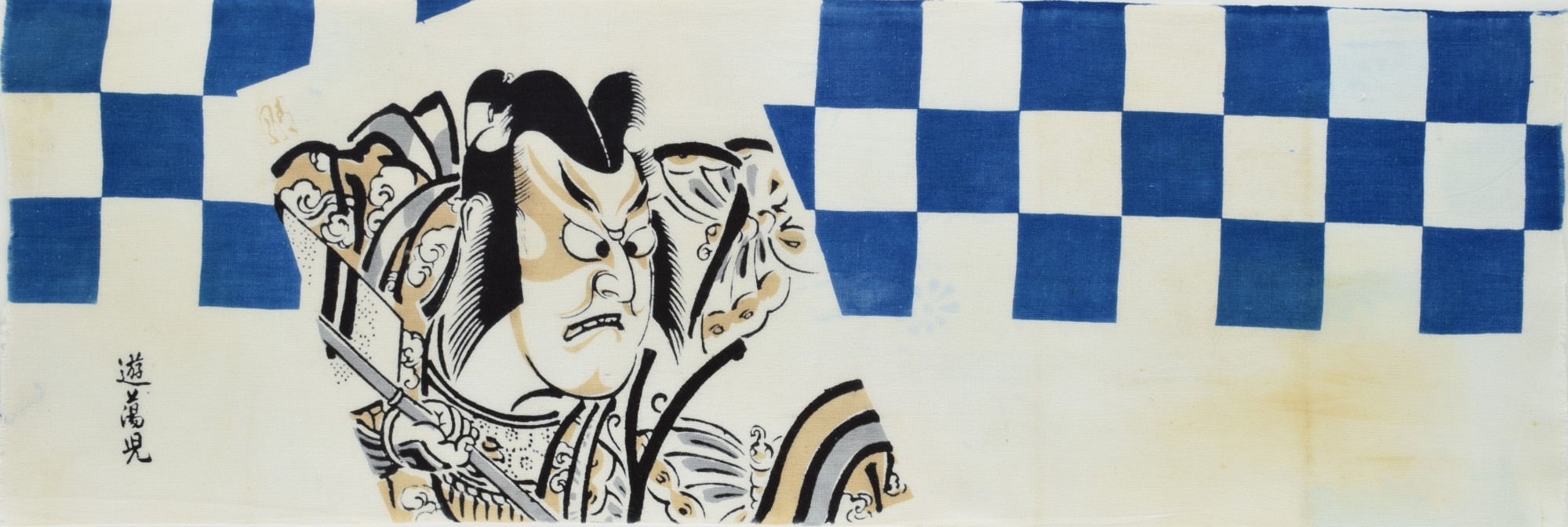
《Yanone Goro (Goro the Arrowhead)》
Design by Seifu Matsuda
Produced by Tokyo Matsuyama Tenugui Store
Technique: Chūsen (Hosokawa-zome, Hosokawa Dyeing)
71st Misome-kai Exhibition Piece (January 1933)
From the Toyoda Collection

《Yukata Fabric with Horizontal Stripes, Diamond Lattice, and Hanabishi Pattern》
Manufactured by a member of the Tokyo Chūgata Promotion Association
Technique: Chūsen (Isshoku-zome, Single-Color Dyeing)
Material: Cotton Ro-ji (Ro Weave Fabric)
From the Toyoda Collection
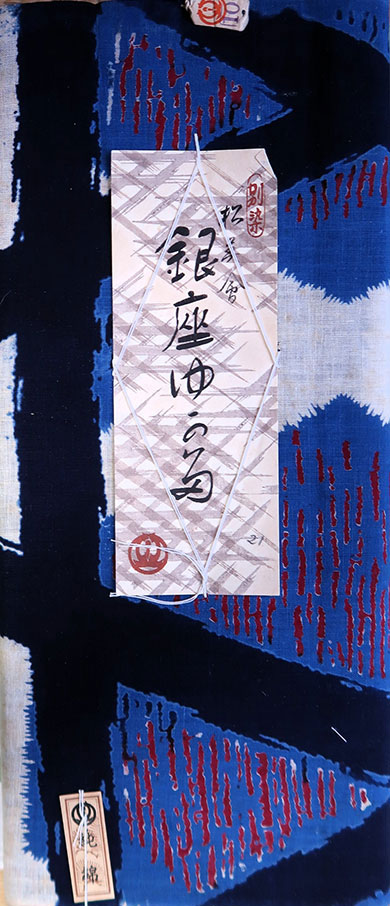
《Bessen (Custom-Dyed) Shobikai Ginza Yukata》
Technique: Chūsen (Hosokawa-zome, Hosokawa Dyeing)
From the Toyoda Collection
Note: Shobikai was an event organized by Matsuya Department Store (Kimono section) to showcase the latest trends.
About Tokyo Honzome Chūsen Yukata (Yukata Fabric)

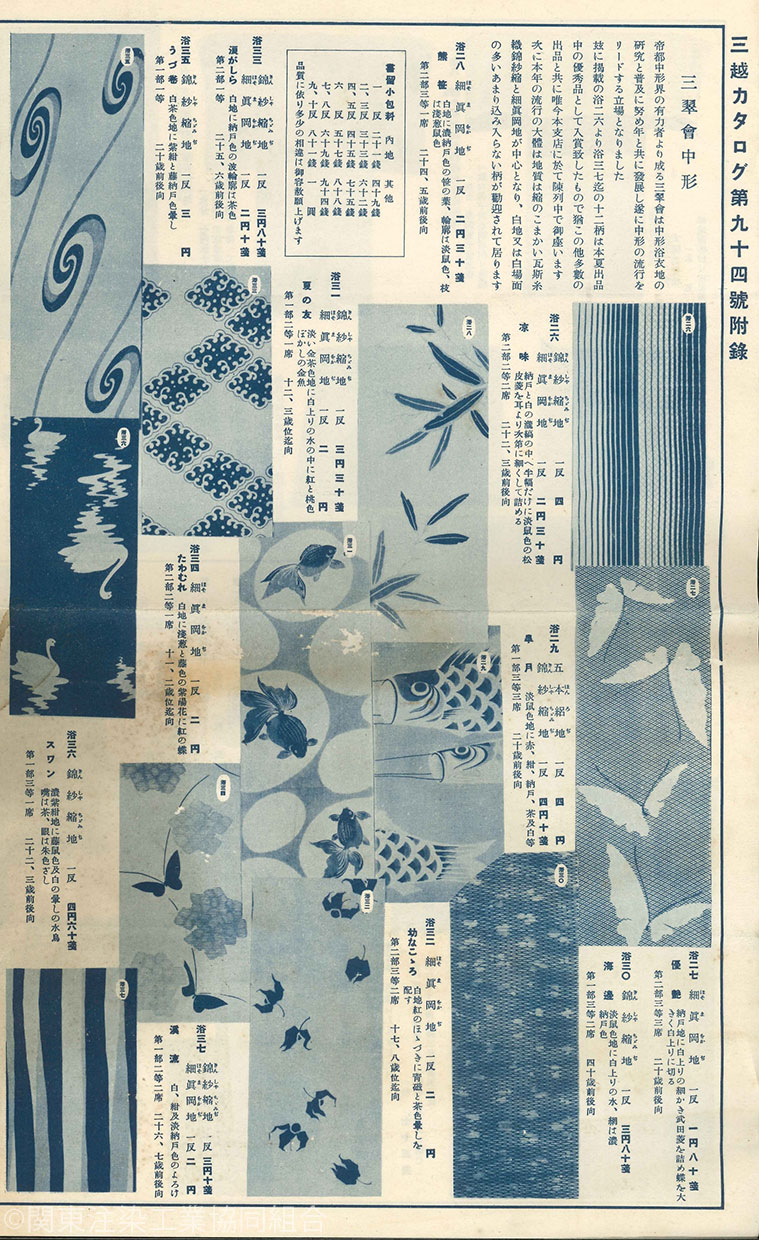
“Sansuikai Chugata” (Sansuikai’s Chugata-style fabrics) Featured in the ‘Mitsukoshi Catalogue No. 94 Appendix’, published June 1933. The Sansuikai was a group formed by influential Tokyo Chugata wholesalers who were business partners of the Mitsukoshi department store. The publication features Chūsen Yukata fabrics that won awards at the group’s exhibition.
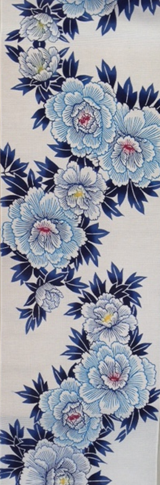
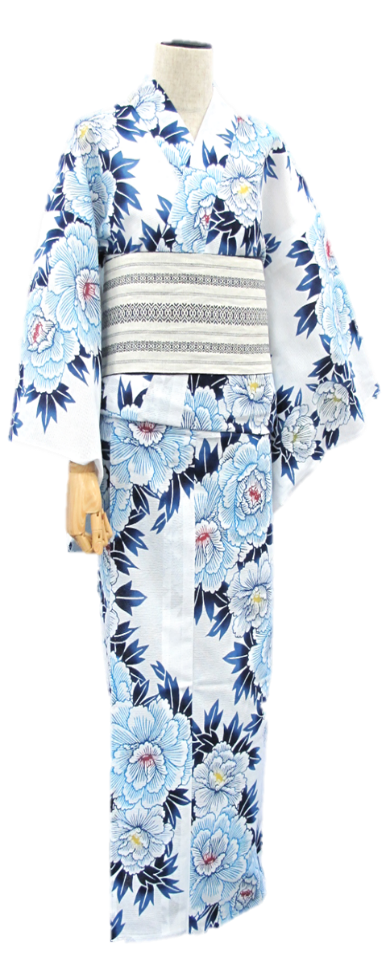
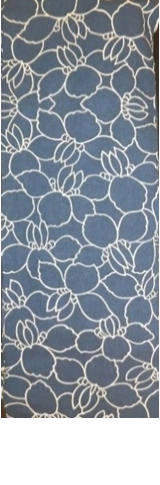
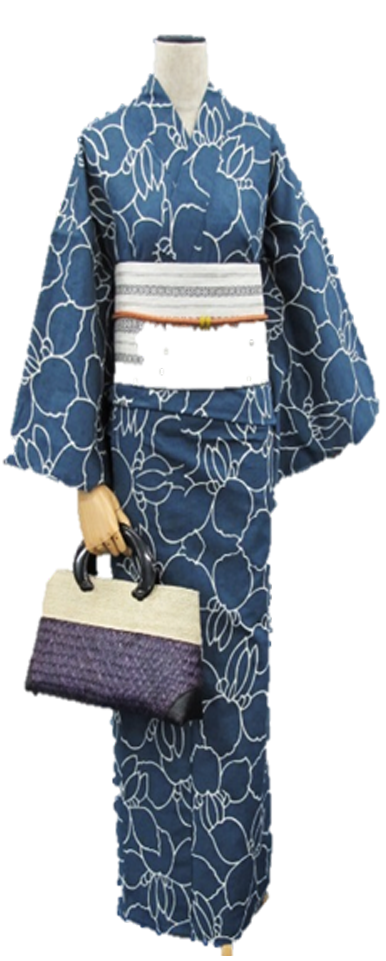
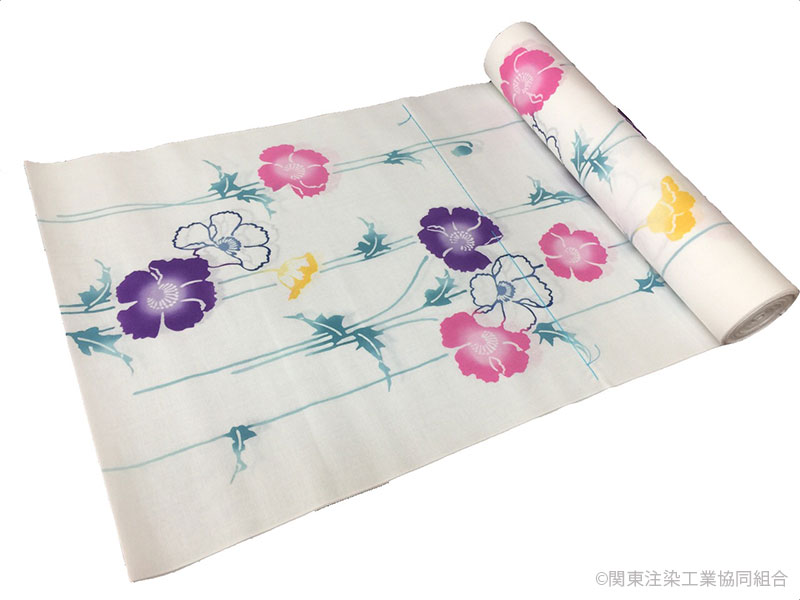
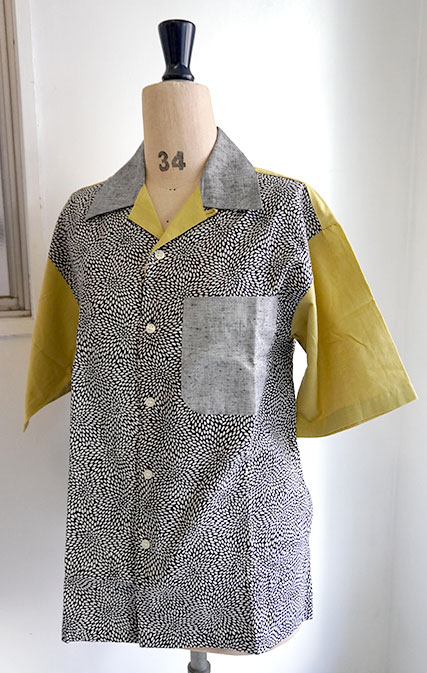
Originating as a practical item for wiping oneself after bathing, the yukata developed during the Edo period into a “post-bath garment,” becoming a relaxed summer evening wear. In the Meiji era, it became established as standard summer casual wear. While Yukata fabric dyed using the Nagaita Chugata technique, inherited from the Edo period, was a specialty of Tokyo, the application of the Chūsen (pour-dyeing) technique to Yukata fabric began in the late Meiji period. In the early Showa period, Chūsen became synonymous with Tokyo Yukata fabric, cherished as a summer outfit suitable for modern urban life. Even today, the Yukata is widely worn as a casual summer kimono, particularly at summer events such as fireworks displays and festivals. It is also used as sleepwear and loungewear at accommodations like traditional inns (ryokan). Beyond being tailored into a Yukata garment, the fabric (tanmono, or bolt of cloth) is also being used to make Western clothing like shirts, as well as small items like bags.

“Sansuikai Chugata” (Sansuikai’s Chugata-style fabrics)
Featured in the ‘Mitsukoshi Catalogue No. 94 Appendix’, published June 1933. The Sansuikai was a group formed by influential Tokyo Chugata wholesalers who were business partners of the Mitsukoshi department store. The publication features Chūsen Yukata fabrics that won awards at the group’s exhibition.
November 2025 Edition
Supervised by: Naoko Okubo, Miyagi Gakuin Women’s University
 Contact Us